Thursday, March 19, 2009

Resident Evil, Racism . . .and Comic Relief.

Okay, I blogged previously about how Comic Relief was really a celebration of money and capitalism. The basic gist of this was that rather than deal with the problems of poverty in the third world and the shortcomings of the social care system back home in a direct way we instead construct an elaborate theatre where a large amount of money has to be raised, displayed and celebrated. I compared this to the "trickle down" theory of socially responsible capitalism: we must rescue the banks, with no debate or vote, because the poor can only be helped when the financial institutions are strong, etc. Recent developments in other areas have caused me to consider the phenomenon of Comic Relief, Live Aid and the like, and so I find myself offering the same caveat before launching into my rant: of course lots of good is done by these events and organisations, they are perhaps the best way of making an omelet without breaking any eggs.

I have recently had my attention drawn to the new Resident Evil game, mainly by the protests of liberal friends and colleagues that are disgusted by its racist undertones. I have not played the game, so I can only resort to the media coverage, much like the people that are voicing their disgust, some calling for the game to be banned. The game franchise mainly centres around shooting zombies, it's a first person shoot 'em up much like the others. This time though, the game is set in Africa, where a bio-engineered virus has turned a large proportion of the population into zombies. You play a white western special operative and your task is to go to Africa on a mission to blow away black African zombies. Not only this, but you cant tell if they are zombies or not if they get up close to you and attack.

Okay, so this has been enough to get many people riled up and voice their discontent. Fair enough. However, for me it has been interesting watching intelligent, liberal people act like Daily Mail readers. The central concern many be different, anxiety about racism rather than crime or sex, but the pattern is remarkably similar. It turns out that none have played the game, and many seem to be reacting to loaded articles from secondary sources, well maybe "secondary" is generous because most of those sources haven't played the game either. It's also interesting that violence itself seems to be acceptable, but racially motivated violence is not. In the same way, the Daily Mail reader wont call for Saving Private Ryan to be banned for its violent content, but will become immediately agitated when the violence is conducted by working class people in ways that don't respect property rights, such as in the Grand Theft Auto series. This brings to mind Dennis Leary's monologue about dolphin friendly tuna: Don't eat tinned tuna, they catch dolphins in their nets! But what about the tuna? Fuck the tuna! Personally, my reaction on first hearing about the game was absolute incredulity at a western government intervening in African crisis.

As I've already pointed out, I haven't played the game so I wont venture my opinion about whether it is racist or not, but I will make some observations about how it may fit in with how our media portray Africa. Perhaps the most offensive factor is how a diverse continent is always though of as one uniform place with uniform charms and problems. "There wont be snow in Africa this Christmas time" apart from on Mount Kilimanjaro of course. This is of course where I'm heading, isn't the racism of RE5 not so much a continuation of racist prejudices within the West and more the obverse of the depiction of Africa by news agencies and charities as a place of great pain and suffering, often placed in comparison to our wealth? Aren't the images of African zombies attacking the player's first person vantage point reminiscent of segments during telethons such as Comic Relief and news reports that warn people beforehand that they concern disturbing images ( we will show you more comedy soon, but first we will make you watch disturbing images of suffering Africans. You must watch these images and feel pain and pity. If you donate money we will no longer torment you with these images and return to the mainly white comedians.) It may be bold for me to say so, but the horror imagery of diseased Africans attacking you from the other side of a television screen are actually playing on anxieties created by this tactic of engendering liberal guilt rather than more obvious far-right xenophobia about foreigners and minorities.

Part of this problem is intrinsically linked to how capitalist society deals with the problems of the third world. Rather than motivate the population to politically engage with how these problems can be solved there has instead been a strategy where citizens are encouraged to give to charity instead. This has lead to the technique of portraying problem areas in a certain sense to create an immediate effect of unease in order to secure an immediate contribution. While this attempt has been successful in raising money for these causes, it has done so at the expense of real political action and public consciousness about the third world. Racist video games mark the shallow end of this phenomenon, the perpetuation of these problems because of ignorance and short term solutions marks the deep end.

Labels: , ,

Saturday, March 14, 2009

Zizek, Capitalism and Comic Relief

Last Monday I saw Slavoj Zizek deliver a lecture on the collapse of capitalism as part of the Revolution Now season at the Royal Festival Hall. Zizek is of course, a charismatic and brilliant lecturer, though one who seems to slip too slickly from one point to the next. It is only when I catch him talking about something I really know about that I often find he is not as well informed as he can seem. That said, Zizek is primarily a philosopher and one could argue that it is primarily the philosophers task to ask questions rather than give answers, or more importantly, to let us know when we are asking the wrong questions.

One of these wrong questions brought up by Zizek was " What did we do wrong in order to cause the current economic collapse, how did we wrongly apply capitalism to this end?" the question Zizek thinks we really should be asking is "What is inherently wrong within Capitalism itself?" In other words, in times of collapse do we try and find an excuse for capitalism itself? We have heard the apology for the last collapse, "boom/bust" being the key word, the tactical error being turned into a stepping stone in the application of capitalist policy rather than an inherent fault of capitalism itself.

It is from the supposition of this state of denial that Zizek went on to point out one of the most glaring inconsistencies in the policies of the world governments. When poverty, the environment and other major concerns are to be dealt with, the G8 convene for many days. What is the result? We have agreed that we will meet again to discuss these issues in 6 months time...

However, when the banks go up shit creek, the UK and US governments have been quick to put debate and democracy to one side and intervene immediately, with cash injections or covert nationalisations to take massive risks on the future in order to prevent the immediate collapse of these institutions.

It seems that this is part of the idea that we can only help the rest of the world by empowering the financial institutions, the trickle-down myth of socially-conscious capitalism. Zizek went on to point out the "fair trade" myth carried out by Starbucks and other companies wanting to portray themselves as socially responsible. His example was Ethos water, a brand of water that promised 5 cents from every bottle would go to help those in the third world. The bottles themselves were 40 cents more expensive than the standard brand...

It was with this sense of scepticism that I flicked in and out of Comic Relief last night. Isn't the telethon the ultimate way of socially rehabilitating money in times of financial doubt? Every half hour, a total of money is flashed across the screen and we applaud this princely sum and the good it will do. In between the back slappingly awful comic segments we get to see the more serious side, short films about the terrible situations at home and abroad and are told how these can be changed if we give our money.

When we really look at this though, doesn't it beg the question about what should be done to end these situations and why? Once we have identified the problem and what can be done about it, is a bi-annual post-modern television ritual really the only way of providing the solution? Of course there are many people campaigning for policies to change, and gratuitous or not, Comic Relief money will do a lot of good. But the point I am getting to here is not just the obvious one about not having all the right answers. It is far more desperate than that. If the comic relief, fairtrade culture is the only way we can conceive of facing some of the greatest issues affecting the world, as well as distracting ourselves from our current economic situation, are we even anywhere near asking the right questions?

Tuesday, July 15, 2008

My Sets at Latitude

This is a quick heads up about my sets at Latitude for all that are
coming this year. I will be performing three sets during the weekend
and I wont be repeating a poem. To help you get the gist of what I'll
be doing, I've organised my set lists already and each set will follow
a sort of theme. Details below.


Friday 18th July 18.40-19.00


Spinning Yarns: This set will focus on my surreal narrative poems, so
expect an imaginary earthquake in London, demonic football commentators
in derelict South London toilets and a brand spanking new piece about a
man that could catch wolves by shoving his hand into their mouths.


Saturday 19th July 15.40-16.00


Mista Lovah Lovah: Oh yes, a whole set of love poems. From the use of
snowballs as messengers of affection, through to setting postboxes on
fire on Valentines day, to spending time with a loved one on holiday
and bonding over a plate of muscles that were floppy, lippy and more
than a little bit...


Sunday 20th July 16.20-16.40


Sunday Lunch Leftovers: I try to go out with a bang with some greatest
hits that fell outside the remit of the other two sets, expect divorced
ventriloquists, old men with Elvis haircuts, Li-Po makeovers,
Breakfast, Lunch and Dinner.


Sunday, June 22, 2008

It's just not fair!

I've been musing about a common theme that crops up in Poetry circles these days: Jealousy.
Now before you get the idea that this is going to be some self righteous diatribe about what's tearing our blessed art form apart, be assured I'm as prone as the rest. I always seem to catch myself eyeing the line-ups for literary and music festivals, or getting flyers for a new one-person show in the post, or scanning literary journals to see who just got the big thumbs up or a fortuitous nomination for a major prize. At the same time, other poets approach me and ask "How's it going?" in such a way that it really implies "Landed any biggies recently?" After a few beers and a few veiled barbs some might wonder aloud why certain big organisations have stopped ringing them up so frequently.
I could judge them harshly but I myself know that little pang, that shameful song of "What about me?" and its surly follow up "It's just not fair!" Sometimes I seek to bury that feeling deep down, there's nothing productive that comes from it so why indulge it? But then again, that voice is correct. It isn't fair. The poetry scene is one small pie and if you get a big slice don't hang around expecting seconds. It isn't fair. Some poets are more charismatic than others and charisma counts for a lot. It isn't fair. A great deal of the British public don't like poetry, your poet's poet will only satisfy the tastes of the minority. It isn't fair. You-know-who gets a lot of gigs because lots of people fancy them. It isn't fair. Working hard is the only way to climb but that doesn't mean all hard workers will become climbers. It isn't fair.
It isn't fair because it's like every other niche in today's society, but for some reason people seem to expect it from poetry. As if there was some invisible poetry karma fairy with a magic wand ready to make things right for every noble, genuinely gifted poet that ever stoically suffered for their art. This fairy might be distantly related to the god that helps people win Oscars and Grammies, while others starve to death elsewhere. The fairy isn't there, baby. You might as well replace it with Clint Eastward, pointing his rifle at Gene Hackman's face in Unforgiven, whispering "Deserve's got nuffin to do with it." before pulling the trigger.
A little pang, just in the stomach, an emotional tic that you will never lose. All part of being homo sapiens. Might as well get used to it, it really isn't fair. Now, isn't there a poem you should be writing?


Eastwood Saloon scene

Monday, January 07, 2008

Who's that fat bastard?


If you happened to be in Brockwell Park this morning you may have noticed a big heavy lump, limping along at a pitiful pace while wheezing like Yahweh's death scene in His Dark Materials. That was me. It was my first time out jogging for two and a half years, since I started a well intentioned fitness regime after leaving the gardening job. I must've been lapped at least twice by one jogger who looked like the little one from Dick and Dom. I wanted to say "Happy New Year" to all those that passed me by, it was so bloody obvious. As obvious and well intentioned as a return to blogging, eh? Still I am determined to pull some of my shit together this year and that includes getting back in shape.
It also looks like the inevitable has set in after bringing out "Ventriloquism for Monkeys" at the end of last year: writers block. This isn't too special, I'm pretty sure it's a necessary part of the process. The final part of bringing out a book is the editing process, a period of intense self critical analysis and it's hard to come out of that gear and open the creative floodgates. I'm sure I'll be happily writing crap soon enough, just don't ask me for any new work as an exclusive.
Anyway, I'm back at the Poetry Cafe tomorrow to get rid of the ring rust and I'm reading on Thursday at Borders bookstore in Angel at around 7ish. I'm really looking forward to waffling the usual bollocks to my beleaguered audience. I have a few books left from the first short run of Venriloquism for sale, so if you want to be one of the few to own the special "twenty empty pages padding out the back" limited edition copy you better get in there quick. Nobody seems to notice the poignancy of their following a poem about staring at a blank white screen in an empty cinema, a poignancy that is of course completely unintentional.
After the busy end to last year, I've begun this one feeling shagged out, lethargic and a little disillusioned. I know that there's plenty to be happy about in my life so I'm not going to beg any sympathy. There's one image I currently carry round with me like the image of the red sun I carried in the poem 12 Seconds. This time it was the sight of a huge bud on the end of a branch of a plane tree on Herne Hill. The thing was clenched tight and ready to burst in the most spectacular way. When I think of that huge bud, I clench my own fist and watch my knuckles whiten. I currently lack the means to express it, but this fills me with a sense of enormous satisfaction.
Bloody Hell, that was a bit Freudian...
Happy New Year Dear Reader.


Powered by ScribeFire.

Tuesday, May 01, 2007

National Gallery Podcast


Last month I was one of a group of poets commissioned to write new work to be used in a bonus track for May's National Gallery podcast. The theme is "Night at the Museum". In preparation for this I had the honour of strolling round the gallery after closing time. The night lighting is heat sensitive so they would come on when we walked into a room, and go out again after we walked out. It was beautiful and spooky, especially when I saw Stubbs' Horse silhouetted in an adjacent room.

To listen to it, (only about seven minutes long so it should be painless) follow the link above or download the bonus track directly by right clicking this link for the mp4 file with images or this link for a sound only file. My poem is called"Goodnight Vincent" and I appear about 3min 30 sec into the bonus track.

Just for posterity here's the transcript for the poem they chose

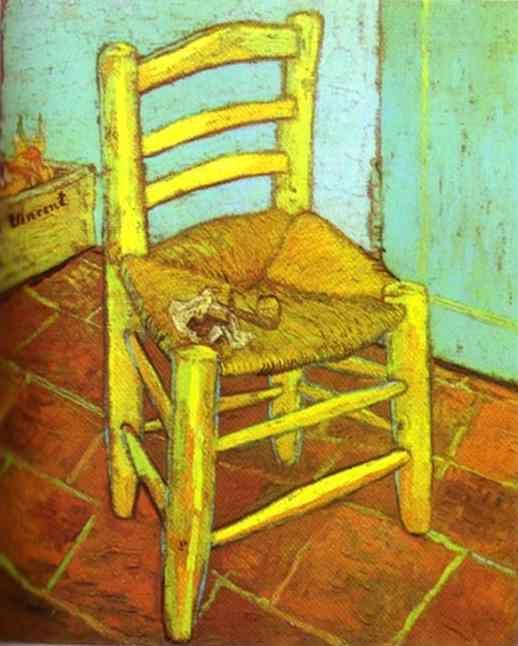
Goodnight Vincent

Vincent,
your cocky chair nearly had us,
almost a dare rather than an invitation.
You skew perspective,
pitch that hard clay floor into our faces
and yet those roots reach out
from the box of onions,
prove that the truth, the will,
cannot be contained.

A blunt offer,
yet still an invitation,
Please be seated, minus the please.
We reciprocate with a bi-millenial
money tainted gaze,
scanning for some emo-porn
omens of tragedy rumbling beneath
thick smears of beaming yellow.

Perhaps it is more fitting
that when the floor no longer squeaks
with the gait of rubber soles,
after the day’s last echoing whisper
signifies the constant failure of words…

Lights out.
Photons cease their frantic dance
with no retinal rods to catch them.
I like to think that your invitation still stands
though it is the silence, the stillness, the darkness
That accept it.

Niall O’Sullivan
04/07


Powered by ScribeFire.

Wednesday, April 18, 2007

Hot Air and Cold Science

Philosophers have been almost profoundly wrong in almost every question under the sun over the last 2000 years. You should never listen to the answers of philosophers, but you should listen to their questions.

- Christof Koch


One poetic myth I hear every now and again is the one about the cold, know it all scientist. Perhaps the most famous incarnation is Blake's image of Newton, a classically beautiful male, sat naked on a rock resplendent with many coloured minerals, ignoring it all to concentrate on the perfect circles that he renders with his compass. Look at the crude image, the circle and triangle, it is nothing compared to the beauty of his own body or the grandeur of all those vivid colours in the rock behind him, pointing out all the beauty of this world that will never be explained by science...

I bite my tongue.

Last night, during the open mike that I run, the same apparition rose again, within a couple of poems written by an avid Wittgensteinian. Like the Blake print above, the poem was beautifully rendered and a pleasure to listen to even though the subtext ( which I shall crudely render from memory without the skilled poetic framing ) set my hair bristling. It went a little something like this.

" The scientist can try saying he has the only way of reaching the truth. But be it from the question of what lies beyond the electron and neutron or what exactly happened before the big bang; science inevitably collapses into metaphor. Therefore, what is wrong with choosing metaphor now? I can stare at the light playing across these hills and enjoy the sensation, but science will do nothing to explain or intensify this enjoyment."

Once again, I bite my tongue.

Well.... I loosen the knot a little to make cursory mumbles about how accommodating one would be if their gas engineer took a purely metaphorical slant on the carbon monoxide levels emitted from their boiler. Or whether we'd stay on a plane on finding out that it wasn't checked by a group of engineers but by a poetry group that meet in a Newbury back room to concentrate on an alternative metaphorical exploration of aerodynamics.

One thing I shall point out is that I don't know of a single scientist who has assumed the attitude of knowing everything. More than anyone, it's the scientist that admits to not knowing all the answers. The whole process of scientific theory is to find a falsifiable hypothesis and to then go about trying to falsify it. The way of becoming great in science is to prove your own heroes, the greatest theories, wrong. The search for scientific truth can indeed be a thankless task, it involves lots of lab work where nothing happens, lots of fuzzy inconclusive results, and if you find something new....get ready for the shitstorm. Because you better have your figures right, you better have checked all the possible fault lines because peer review is a bitch. Everyone will try their best to shoot you down. Nope, scientists do not have any exclusive claims to know the truth but I could point out a lot of Pastors, Rabbis, Imams, artists and astrologers that do. Let me steal some words from Picasso about art and truth. "We all know that art is not truth. Art is a lie that makes us realise truth, at least the truth that is given us to understand. The artist must know the manner whereby to convince others of the truthfulness of his lies."

Newton admitted to the things he didn't know, but his way of admitting to ignorance is somewhat traditional. From the Principia -

"Hitherto I have not been able to discover the cause of those properties of gravity from the phenomena, and I frame no hypothesis; for whatever is not deduced from the phenomena is to be called an hypothesis; and hypotheses, whether metaphysical or physical, whether of occult qualities or mechanical, have no place in experimental philosophy. In this philosophy particular propositions are inferred from the phenomena, and afterward rendered general by deduction. Thus it was the impenetrability, the mobility, and the impulsive forces of bodies, and the laws of motion and of gravitation were discovered. And to us it is enough that gravity does really exist, and acts according to the laws which we have explained, and abundantly serves to account for all the motions of the celestial bodies, and of our sea."

So he'd worked out many of the laws that govern the motion of planets, but he was still reaching his own personal limits when he tried to consider the momentary tug that planets experience when nearing each other's orbits, and he was of course stumped by their origin. So, as our poet pointed out earlier, he moves into the realm of metaphor:

"This most beautiful system of the sun, planets, and comets could only proceed from the
counsel and dominion of an intelligent and powerful Being."

But this was the standard answer given by the scientists before Newton when they couldn't explain the fixed orbit of the planets; when they reached the limits of their explanatory ability they invoked God as the answer. God was the answer for the diversity of life before the discovery of evolution by natural selection. Vitalism was taken seriously as an irreducible essence of life before Watson and Crick gave us the double helix and the humble deoxyribonucleic acid. However, in the past century and a half, probably because of the discoveries of Darwin, God has had to share elbow room in the unknowable with other theories. Scientific hypotheses, such as time coming into existence alongside matter with nothing before it or the birth of our universe as part of a multiverse, are suddenly sharing elbow room with the Prime Mover in metaphorical space. But this is where I have to concede to the philosophers, the Wittgensteinians and the post-modernists. In this realm of what is yet to be discovered we have to concede that without the necessary evidence what we postulate is another metaphor. Fair enough, but science is the only discipline with the ability to have the final say.

And finally, back to Newton and the attitude towards science as "cold" in comparison to looking over some hills or at a work of art such as Blake's. We all know that the science that lobs rockets from the surface of earth into the cosmos is still fundamentally Newtonian. In 1990, the Voyager 1 spacecraft left our solar system, and got to turn around and take one last look at our planet from a distance of four billion miles. The image below is that photograph. The pale blue dot caught within the sunbeam to the right, about halfway down, is our planet. Before this image was taken you could say that this view was the luxury of God. I leave you with the joy of looking at the Blake image and the Voyager 1 image. It's up to you which one you deem to be the most humbling.


Powered by ScribeFire.